Corporate video is any video content created by or for a business that isn’t a paid advertisement. It covers everything from company overviews and product demonstrations to employee training and investor updates. The defining characteristic is purpose: these videos inform, educate, or engage specific audiences to achieve business objectives.
The difference from advertising is intent. A TV commercial sells a product in 30 seconds. A corporate video builds understanding, trust, and connection over time. Think billboard versus conversation.
Whether you’re exploring video for the first time or looking to work with a crew in Spain or elsewhere in Europe, understanding what corporate video actually means helps you figure out what you need.
We’ve been producing corporate video in Spain since 2008, working with international brands and agencies across the UK, US, and Europe. The best corporate videos happen when you understand the process and make informed decisions about what you actually need. So let’s break it down.
Do I need a corporate video?
As a brand, you may wonder whether a corporate video is truly necessary and what value it could bring. Will it increase brand awareness? Will it help you sell more?
Long story short: corporate video now covers internal communications, employer branding, thought leadership, stakeholder relations, training programs, and brand storytelling. The format adapts to whatever you need it to do.
The numbers back up what we see in practice. Companies using video report 49% faster revenue growth than those that don’t. Landing pages with video convert up to 80% better. LinkedIn has become the most widely used video marketing platform for B2B companies, which tells you where decision-makers are paying attention.
Here’s what matters most: quality directly impacts trust. 91% of consumers say video quality affects their trust in a brand. Poor production doesn’t just fail to help, it actively damages how people perceive your business.
For more on video ROI and what international brands are learning about corporate video effectiveness, see our deep analysis about B2B video ROI in 2025.
What are the different types of corporate videos?
Corporate video is a broad category. Understanding the different types helps you choose the right approach for your goals. Each format serves specific purposes and delivers particular results.
Brand films and company overview videos
These tell your organization’s story in a compelling, emotional way. Usually two to five minutes, they establish your values, culture, and positioning. They’re the foundation of your video presence, usually living on website homepages, used in investor presentations, that kind of thing.
A strong brand film can serve your business for three to five years, which makes the investment in quality production worth it. The goal is creating an emotional connection that goes beyond facts and figures. When done right, these videos make people feel something about your company, not just understand what you do.
Event coverage and highlights
Capture conferences, product launches, trade shows, and company milestones. These extend the reach of events beyond attendees and create content that builds momentum around key moments.
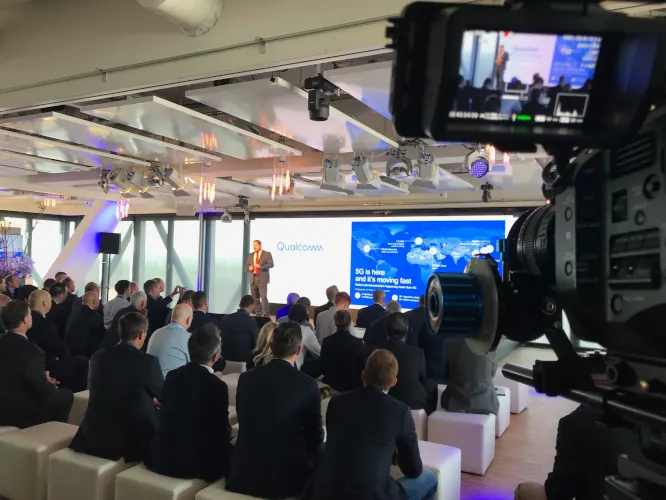
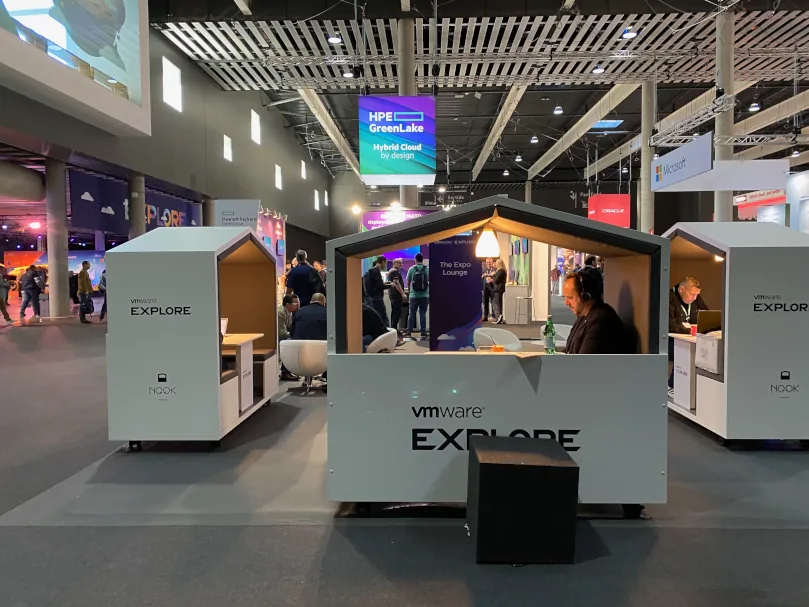
For example, we’ve been covering Mobile World Congress in Barcelona for multiple years now. What we’ve learned is that the content generated from a single event can feed your social media and marketing campaigns for months afterward. A two-day event gives you dozens of individual clips, highlight reels, interview segments, and behind-the-scenes content. Event video is one of the best content investments because you’re getting multiple pieces from a single production.
Interview-style videos
Feature executives, subject matter experts, or team members discussing topics relevant to your audience. These work particularly well for thought leadership, explaining complex topics, and putting human faces to corporate messaging.
The format is versatile: a single interview shoot can yield multiple shorter clips for different platforms and purposes. Interview videos feel authentic when done well, which matters when audiences can spot scripted corporate speak instantly.
Product demonstration and explainer videos
Show rather than tell. When 78% of consumers prefer watching a short video to learn about a product over reading text, the value proposition is obvious.
These videos can live throughout your sales funnel, from initial awareness through final purchase consideration. The key is focusing on benefits and user outcomes rather than feature lists. A good product demo answers “how will this solve my problem?” within the first 30 seconds. If you’re still setting up context at the 45-second mark, you’ve already lost people.
Testimonial and case study videos
Leverage your existing customers to build credibility with prospective ones. Nothing sells like a satisfied customer explaining the problem you solved for them. These work particularly well for B2B companies with longer sales cycles where trust is paramount.
Testimonials shot on location at the customer’s facility add authenticity that studio setups can’t match. Real environments with real people carry more weight than polished corporate settings. People can tell the difference.
Training and educational content
Serves internal audiences. Employee onboarding, safety protocols, skills development, and process documentation all benefit from video’s ability to standardize messaging and scale delivery. One well-produced training video replaces countless hours of repeated in-person instruction. Organizations with distributed teams or high turnover rates see particularly strong returns here. You create it once, it works everywhere.
Recruitment and employer branding videos
Help you compete for talent. Candidates research prospective employers online, and video gives them a window into your workplace culture.
The most effective recruitment videos feature real employees in authentic settings rather than scripted performances. Show people what it’s actually like to work at your company rather than what you think they want to hear. The overly polished “we’re a family” videos don’t land anymore. Authenticity wins.
How does remote video production actually work for corporate videos?
Working with a production crew abroad
Working with a production crew in another country is simpler than you might expect. The key is understanding that remote crews can work in whatever capacity your project needs.
Full video service vs. production support
You might arrive with complete creative direction (scripts, storyboards, shot lists) and need the local crew purely for execution: equipment, personnel, and logistics. Or you might need the production company to handle the entire process from concept to final delivery. Most experienced international production crews are fully capable of both approaches. The question is what makes sense for your project and what you have the internal capacity to handle. Get clear on this upfront and you’ll avoid miscommunication later.
Pre-production: planning across countries and time zones
Before actually shooting, expect to discuss requirements, locations, timeline, and any specific challenges. If you’re filming at multiple locations across a country, the crew handles logistics like permits, equipment rental, and crew booking across time zones. Good production partners will also offer location recommendations based on local knowledge: they know which spaces work for filming and which create problems you can’t see in photos.
Remote monitoring during the shoot
During production, remote monitoring has changed everything. Cloud platforms let you watch live feeds as filming happens. You’re seeing exactly what’s being captured in real time. You can provide direction and feedback without being on location. This kills the old anxiety of not knowing what you’re getting until post-production. Many production managers monitor the first setup to ensure alignment, then step away once they’re confident the crew understands the brief.
Post-production and global collaboration
After the shoot, you’ll receive organized footage ready for your editor, unless the crew is handling post-production as well. Cloud-based review platforms make collaboration seamless across continents and time zones.
What makes remote video production successful
Clear communication, realistic timelines, and fast decision-making are the pillars that make remote production truly work. When everyone understands expectations and roles, the process becomes smooth and predictable.
A Pro-Tip: Teleprompters for Corporate Filming
One practical detail to ask about is teleprompters. When filming executives or employees who aren’t comfortable on camera, teleprompters let speakers maintain eye contact while delivering their message accurately. It’s a small factor that makes a big difference in confidence, speed, and overall polish. We bring them to most corporate shoots because it speeds up filming and delivers more confident, polished results.
How much does corporate video production cost?
Corporate video costs vary enormously based on scope and requirements, which is why most production companies won’t quote prices without understanding your specific needs. What’s actually useful is understanding the factors that drive pricing so you can budget effectively and avoid surprises.
Complexity matters more than length. A highly polished 90-second animated video with custom visuals may require more investment than a straightforward five-minute interview. The cost-per-minute metric misleads more than it clarifies. Understanding what makes your project complex gives you better insight into budgeting than focusing on runtime.
Crew size directly impacts cost. A basic interview setup might need a videographer and sound technician. A more complex production adds a director, producer, lighting specialist, and assistants. High-end work might include motion designers, multiple camera operators, and specialized technicians. More people means higher daily rates but also means faster, more efficient shooting.
Location requirements drive significant variation. Single-location shoots at your office are straightforward. Multiple locations add travel time, permit costs, and logistical coordination. Studio rentals offer controlled environments but come with rental fees. International shoots add travel expenses for crew and equipment.
Equipment and specialized tools factor in when projects require specific capabilities. Standard corporate production uses professional cameras, lighting, and audio. Adding drone footage, motion control, specialty lenses, or green screen capability increases both rental costs and crew expertise requirements. But these additions aren’t arbitrary: they solve specific creative challenges.
Post-production complexity varies widely. Basic editing with minimal graphics requires less time than projects with extensive motion graphics, animation, color grading, and sound design. Music licensing adds cost unless you use royalty-free options. Multiple language versions require additional localization work. Revision rounds beyond initial scope add time and cost.
Regional markets affect pricing significantly. Major metropolitan areas like London, New York, and Los Angeles command premium rates due to higher operational costs and demand. Secondary markets and some international locations can provide cost advantages while maintaining professional quality standards. Production hubs like Barcelona, Prague, or Cape Town often deliver comparable crews and equipment at more accessible rates. If budget is a constraint and you have location flexibility, this is worth considering.
Timeline pressure increases costs. Rush projects require overtime, expedited workflows, and compressed quality control processes. Adequate planning time leads to more efficient, cost-effective production. Build in buffer time if possible.
Hidden costs to watch for: location permits and insurance, travel expenses for crew, overtime charges when shoots run long, music licensing fees, revision rounds beyond agreed scope, subtitle creation and translation, and multiple format deliveries. Ask for detailed breakdowns upfront and understand what’s included versus additional.
The difference between budget and professional production shows in outcomes. Professional video creates lasting impressions, builds brand credibility, and drives measurable results. 92% of marketers report positive ROI from professionally produced videos. Low-quality video can damage brand perception more than having no video at all. You’re better off waiting to do it right than rushing out something that undermines your brand.
Think of video production pricing like any professional service. You’re paying for expertise, equipment, creative vision, and the peace of mind that comes from working with people who know what they’re doing. Companies that view video as an investment rather than an expense consistently get better results.
Making corporate video work for your business
Corporate video has gone from nice-to-have to essential business communication. The path forward involves understanding what type of video serves your goals, working with crews who have the equipment and expertise to deliver professional quality, and treating production as a collaborative process whether you’re in the same room or across an ocean.
What matters most is starting with clear objectives. Don’t create video for video’s sake. Know what you’re trying to achieve, who you’re trying to reach, and how you’ll measure success. Good corporate video doesn’t happen by accident. It happens through careful planning, professional execution, and attention to the details that separate forgettable content from video that actually moves your business forward.
The companies getting the best results from corporate video treat it as strategic communication, not a production checklist. They understand their audience, they choose the right format, they invest appropriately in quality, and they work with production partners who understand how to turn ideas into video that delivers business results.
No matter where your company is located, we can help you create a professional corporate video in Spain. Whether you want to visit us in person or work with our team remotely, our english-speaking experienced video production crew will guide you every step of the way.
This website uses cookies so that we can provide you with the best user experience possible. Cookie information is stored in your browser and performs functions such as recognising you when you return to our website and helping our team to understand which sections of the website you find most interesting and useful.
3rd Party Cookies
This website uses Google Analytics to collect anonymous information such as the number of visitors to the site, and the most popular pages.
Keeping this cookie enabled helps us to improve our website.
Please enable Strictly Necessary Cookies first so that we can save your preferences!