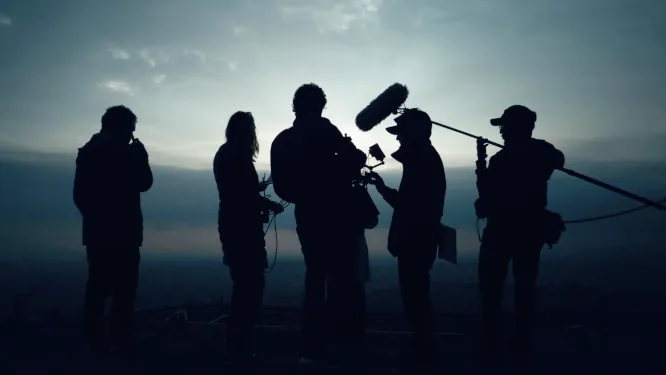
A film fixer in Spain is a local production professional who handles permits, crew, locations, and logistics for international shoots, the parts that can’t be managed from abroad. The role exists because Spain’s production environment doesn’t standardise across its 17 autonomous communities, and the gap between knowing that and knowing what to do about it is where fixers earn their fee.
What clears in three days in Madrid may take three weeks in Seville. A fixer knows which system they’re dealing with before you’ve confirmed the location.
We’ve been fixing productions across Spain since 2008, working with broadcasters, commercial brands, and documentary crews from the UK, US, and across Europe. This is what a production fixer actually does here.
What “film fixer in Spain” actually means
A production fixer is the local professional who stands between an international crew’s brief and the reality of executing it in Spain. They combine ground-level knowledge of Spanish film permit systems, crew networks, location access, and working culture with the production experience to translate all of that into a working schedule.
The term covers a range of operating models. At one end: a freelance individual handling logistics for smaller shoots. At the other: a production service company with staffed teams, direct supplier relationships, and the infrastructure to run multi-city productions simultaneously.
The difference matters in practice. For a small documentary crew needing location support in one city, a competent individual fixer covers the work. For a commercial production moving through Madrid, Barcelona, and Seville across a five-day schedule, you need something closer to a full production operation with local presence in each city.
What a Film Fixer Handles Before and During Production
Most of the value a production fixer in Spain delivers happens before cameras roll. Pre-production here involves more administrative layers than most international producers anticipate.
Location scouting and permit feasibility. Finding a location is step one. Assessing whether it can actually be permitted for your dates, crew size, and equipment is a separate job. Many locations that look available on screen sit in heritage-protected zones, high-traffic tourist areas with filming restrictions, or under the jurisdiction of two different bodies with separate permit timelines. A good fixer scouts visually and checks permit feasibility at the same time, before you commit.
Permit filing across regional systems. Spain’s permit structure is not national. Each city runs through different offices, different processes, and different timelines. A fixer working across Spain knows which authority to approach for each location and how to handle the film permit application process so the visiting production doesn’t have to navigate a system they’ve never dealt with before.
Crew sourcing and logistics. Some international productions arrive with their full crew and just need someone to handle the ground logistics around them. Others bring the director and DP and need a fixer to source the full crew against their specs and working methods. Either way, a fixer takes care of what can’t be managed from abroad: local transport, accommodation, equipment rental, and the daily logistics that keep a shoot moving.
On-set support. Once the shoot starts, a fixer stays on. Local authorities may show up to check permits. A last-minute equipment failure needs an immediate replacement from a local supplier. A noise complaint from a neighbouring business needs handling before it shuts down the location. A fixer handles all of this in real time without pulling the director or DP off their work.
What to Look for When Hiring a Film Fixer in Spain
Not every fixer operates at the same level, and the gap between a good one and a bad one shows up fast on the shoot day.
National vs regional coverage. A fixer with deep knowledge of Barcelona may have no real network in Seville. If your production moves across regions, confirm they have genuine local presence in each city, not just a claim of national coverage.
Permit track record. Ask specifically about the locations you want to shoot. A fixer who has permitted a similar location before will give you a realistic timeline. One who hasn’t will give you an optimistic one.
Production experience, not just logistics experience. The best fixers think like producers. They flag problems before they happen rather than reporting them once they do. Ask about productions similar to yours in scale and type.
Communication before you land. How a fixer handles the pre-production phase tells you everything about how they’ll handle the shoot. Slow responses, vague answers, or reluctance to commit to specifics in writing are all warning signs. The quality of that early exchange depends partly on what you give the fixer to work with. How to brief a film fixer in Spain covers what to prepare and send before the first call.
Scalability. If your production grows during pre-production, can they grow with it? A fixer who works solo may not have the capacity to absorb scope changes without dropping quality somewhere.
How a Film Fixer in Spain Handles Permits
Spain is one of Europe’s most-requested filming destinations, and its permit system is genuinely complex. There is no central national body. Each municipality issues its own permits, and heritage sites run their own independent approval processes on top of that.
A film fixer helps productions navigate this fragmented system by knowing the right contacts in each city, understanding exactly what each application needs, and making sure nothing sits waiting when it shouldn’t.
Barcelona: most permits require a Spanish-registered company. International crews cannot apply directly for anything beyond a small handheld shoot. Having a fixer in Barcelona, like ours, or a locally registered production partner isn’t a convenience, it’s almost a requirement.
Madrid: two permit categories depending on crew size and equipment. The process runs through the city’s Filming Authorisations Bureau. For corporate and event productions, venues like IFEMA have established access processes that experienced Madrid fixers have handled many times before. Knowing which category permit your shoot falls into before you apply saves significant time.
Valencia: 30-day minimum lead time with a Spanish-only online system. Any production that fences off public space, impedes traffic, or has a crew over ten people must apply through the Electronic Office. At the time of writing, the system operates in Spanish only with no English interface. For international crews, this is not a process you can easily run without a local fixer in Valencia.
Seville: major heritage sites each run their own independent approval process. The Real Alcázar, the Cathedral, and the Archivo de Indias sit outside the standard municipal permit system entirely. A fixer in Seville builds those parallel timelines into pre-production from day one. Productions that don’t account for them risk missing their shoot dates.
Fixer vs production service company in Spain: which one do you need?
The distinction comes down to scope. A single fixer usually covers logistics, permits, and local coordination for shoots that are well-defined and contained. A production service company brings staffed teams, equipment infrastructure, supplier networks, and the capacity to absorb the kind of simultaneous demands that larger or multi-city productions generate.
Film Fixer
Production Service Company
Best for
Contained, single-city shoots with a defined brief
Multi-city, high-volume, or scope-heavy productions
Scope
Permits, logistics, local coordination
Full operation: crew, equipment, logistics, permits, coordination
Team
Usually one experienced individual
Staffed teams with local presence in each city
Capacity
Works well when the brief is fixed before you land
The decision isn’t always obvious upfront. Some productions need one person on the ground. Others need a full local operation. And some start with the first and need the second by the time they land.
Since 2008, we’ve worked across both ends of that range producing 200+ projects across Spain for broadcasters, commercial brands, and documentary crews, working with clients including BBC, Discovery, Puma, and McLaren. If you’re planning a shoot in Spain and want to understand which level of support your shoot needs, the best starting point is a direct conversation.
This website uses cookies so that we can provide you with the best user experience possible. Cookie information is stored in your browser and performs functions such as recognising you when you return to our website and helping our team to understand which sections of the website you find most interesting and useful.
3rd Party Cookies
This website uses Google Analytics to collect anonymous information such as the number of visitors to the site, and the most popular pages.
Keeping this cookie enabled helps us to improve our website.
Please enable Strictly Necessary Cookies first so that we can save your preferences!