Written by: Markus Ruf | Founder & Head of Production Solving production challenges across Spain since 2008
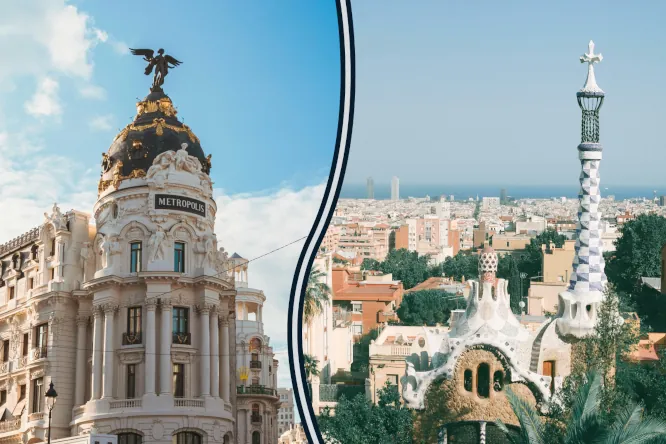
Madrid suits narrative filmmaking, corporate content, and any brief that needs cinematic European gravitas. Barcelona is the production capital for commercial campaigns, fashion shoots, and anything that requires coastal locations or fast rotation through varied location types. The city you choose shapes your crew specialisation, your locations, and your permit lead time.
Last month, a creative director from London called me at 11 PM. “We’ve got approval for the Spain shoot,” she said, “but the client can’t decide between Madrid and Barcelona. We fly out in three weeks.”
I’ve heard some version of this conversation at least a hundred times since we started filming across Spain in 2008. The truth? There’s no universal “right” answer. But after hundreds of productions in both cities, I’ve learned exactly which questions to ask to figure it out fast.
So let’s skip the travel brochure descriptions and talk about what actually matters when you’re standing in a location scout with a shot list in your hand.
Madrid vs Barcelona Production Culture: Film vs Commercial Specialization
Madrid and Barcelona don’t just look different on camera, they have different production DNA.
Madrid is where Spanish cinema lives and breathes. It’s the home of film and series production: when you’re on a Madrid set, you’re surrounded by crews who’ve worked on feature films, TV dramas, and cinematic projects. The city’s visual language skews filmic: dramatic, narrative-driven, with that European cinema aesthetic.
Barcelona is the commercial production capital: fashion shoots, lifestyle campaigns, international brand work. This is Barcelona’s bread and butter. The crews here have shot for every major global brand you can think of. The city’s visual language is aspirational, contemporary, designed to sell a lifestyle.
Both cities have professional film offices and experienced permit handlers. Neither is easier than the other. The real variable is which production culture fits what you’re trying to make.
Madrid Video Production: Corporate, Film & Narrative Projects
Madrid dominates as Spain’s business and film production capital. If you’re filming corporate videos, financial services content, or narrative projects, Madrid’s modern business districts and cinematic heritage provide the credibility and visual language international clients expect.
The city’s production infrastructure is built around Spain’s film and TV industry. When you need crews experienced in narrative storytelling, dramatic cinematography, or corporate gravitas, Madrid delivers.
Best Madrid filming advantages:
Cuatro Torres Business Area (modern European skyline)
Film and series production expertise
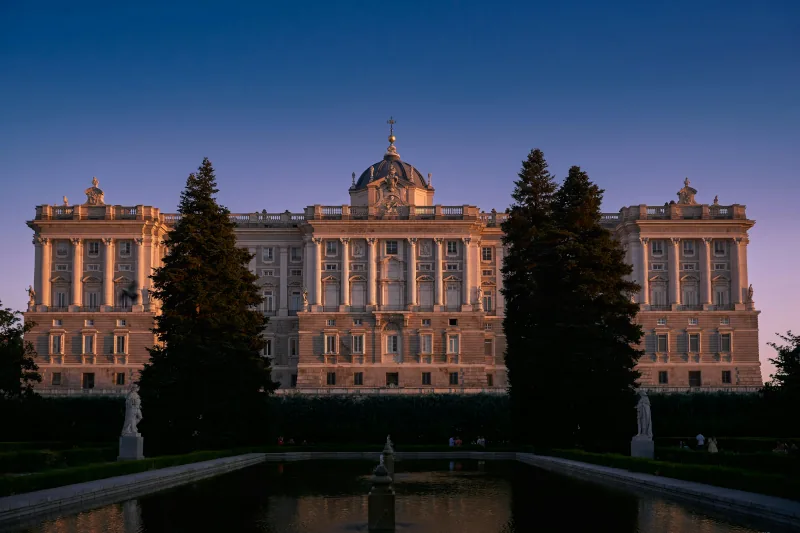
Royal Palace and classical architecture
Spain’s cinema industry hub
Madrid video production excels for: Corporate videos, financial services content, narrative filmmaking, period pieces, and anything where “European business capital” or cinematic storytelling is part of your story.
Filming Madrid’s Architecture: Royal Palace & Historic Locations
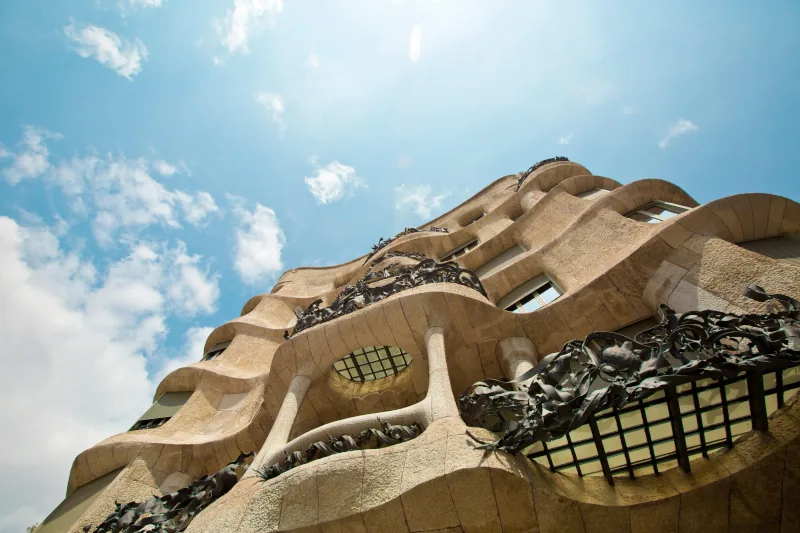
Everyone thinks Barcelona has better architecture. For tourism content, maybe: Sagrada Família and Gaudí are globally iconic for a reason.
But Madrid has something Barcelona doesn’t: recognisable grandeur that hasn’t been shot to death. The Royal Palace is bigger than Buckingham, easier to permit than anything Gaudí-related, and almost never appears in international advertising. Your client gets “European elegance” without the location being instantly placeable.
Retiro Park gives you 125 hectares of variety. We’ve filmed fashion commercials at the Crystal Palace and running shoe launches by the lake. The same permit, completely different frames.
The trade-off is that Madrid doesn’t announce itself. Show someone a photo from the historic centre and they’ll say “somewhere in Europe.” Show them Park Güell and they know immediately. That’s the real question for your brief: does the location need to be recognised, or just look right?
Barcelona Video Production: Fashion, Lifestyle & Commercial Campaigns
Why Barcelona Works for Multi-Location Commercial Shoots
Recently, PUMA and JD Sports came to us with a three-day footwear launch. Different talent each day, and a brief that needed the locations to do heavy visual lifting. They needed the frames to look like three different shoots.
Barcelona gave them eight locations inside the city’s footprint. Day one was the commercial port at sunrise. Day two ran from an underground basketball court in Poblenou to a hotel rooftop in Eixample. Day three was an industrial stretch outside the centre for high-speed car drifting with drone coverage. We moved between them in 15 to 20 minutes.
Try building that schedule in Madrid. The travel time between comparable locations would have cost half a shooting day.
That’s the Barcelona argument for commercial work: it packs more into less time. If your brief needs location variety and a tight shooting window, the geography does the work for you.
One thing that doesn’t need debating: if your shot list has a beach, Barcelona is your only option since Madrid is 350km from the nearest coast.
Discover our Barcelona video production capabilities and how we leverage the city’s unique advantages for fashion, lifestyle, and campaign shoots.
Barcelona wins for: Fashion brands, lifestyle content, commercial campaigns, tech companies, anything coastal, multicultural narratives, and productions needing multiple location “looks” in minimal time.
Filming Both Madrid and Barcelona: Multi-City Production Logistics
Here’s the question that saves more productions than anything else: “What happens if we’re wrong?”
Because here’s the reality: sometimes you pick Madrid and realize on day one that you needed Barcelona’s coastal vibe. Or vice versa.
Spain’s AVE high-speed train runs between both cities in under 3 hours. The fastest trains do it in 2 hours 30 minutes. That’s faster than most people’s morning commute.
We’ve saved productions by adding an emergency Barcelona day to a Madrid-based shoot. We’ve added Madrid’s Royal Palace exteriors to Barcelona tech campaigns. The train makes it possible. Whether the shoot lands in one city or runs across both, our full production services across Spain cover the same scope from a single point of contact.
Budget reality check: In our 250+ productions since 2008, adding a second city typically increases production budget by 25-30%, not double. Why? Because you’re not paying for two complete crews, you’re paying for one crew’s transfer and an extra hotel night.
The flexibility is worth considering, especially for international clients already spending part of the budget on flights.
Practical Production Factors: The Details That Matter
Film Permits Madrid vs Barcelona: Processing Times & Requirements
The two cities work differently on permits. Barcelona can turn around a standard location in as little as 24 hours; Madrid typically needs 7 to 15 working days. Both have free permit thresholds for small crews (under 10-15 people with minimal kit) but once you’re occupying space, fee structures kick in and they vary significantly.
For the full breakdown by city, our film permits Spain guide covers processing times, fee structures, and what triggers a paid permit in each city. We handle all of this for both cities, so lead time is the only variable you need to plan around.
With 15+ years filming across both cities, we handle all film permits in Spain and film office communication while you focus on creative.
Whether you’re filming in Madrid or Barcelona, having someone who knows which forms to submit, which offices to contact, and how to navigate each city’s specific requirements saves time and eliminates stress.
Summer (Jul-Aug): Extreme heat (35-40°C), challenging for crew and equipment
Best filming: Spring (Mar-May) and Fall (Sep-Nov)
Barcelona:
Year-round mild: 10-28°C range most months
300 sunny days: Reliable outdoor filming
Summer consideration: Tourist crowds at landmarks
Best filming: Sep-Nov and Mar-Jun (fewer tourists, perfect weather)
Weather reliability from our experience: Barcelona has a longer outdoor filming window, around 10 to 11 months a year. Madrid’s summers run hot enough to create real equipment and crew management problems, and winter daylight is short. Spring and autumn are the reliable windows in Madrid. In Barcelona, the main seasonal variable isn’t weather, it’s tourist density at landmark locations.
Video Production Crews: Madrid Film vs Barcelona Filming Teams
Both cities offer excellent, experienced crews, but with different specializations.
Madrid crew strengths:
Narrative filmmaking and series production
Cinematic storytelling and dramatic work
Large-scale film productions
Spain’s film industry hub
Barcelona crew strengths:
Commercial and brand campaigns
Fashion and lifestyle content
International advertising work
Music videos and contemporary content
Our production network:Madrid film crews bring deep experience from Spain’s cinema industry: feature films, TV series, and narrative projects. Our Barcelona film crews specialize in commercial work: brand campaigns, fashion shoots, and lifestyle content for international clients. What matters more for international productions is that we staff entirely with English-speaking crew across both cities. No translation layer between your director and the people on set.
Location Scouting in Madrid vs Barcelona: Lessons From 250+ Productions
Best Filming Locations Madrid: Hidden Gems & Production Spots
Casa de Campo: 1,700 hectares on Madrid’s western edge. Green space with Spanish architecture backdrop, useful for outdoor brands that don’t want the obvious city frame.
Matadero: Former slaughterhouse turned arts complex. Industrial without being generic.
Templo de Debod: Egyptian temple, central, barely used in international advertising.
CaixaForum: Vertical garden facade, strong architecture, easy to permit.
Best Filming Locations Barcelona: Beyond Tourist Landmarks
Sant Pau Art Nouveau Site: Modernista architecture, a fraction of Sagrada Família’s crowds.
Bunkers del Carmel: 360° city views, no tourist infrastructure in frame.
Poblenou: Industrial district that’s gone creative. Authentic textures, flexible for street content.
Pro scouting tip: Location scouting is a two-phase process. First, during pre-production, we scout multiple locations and present options with photos and videos, permit requirements, and logistics. Once you select your locations, we conduct technical recces 1-2 days before the shooting to check current light and sound conditions and any site changes. Our location scouting services manage this entire process for both Madrid and Barcelona productions.
Choosing Between Madrid and Barcelona: Production Decision Guide
When to Choose Madrid Video Production
Cinematic or narrative productions. Madrid’s crew base comes from Spain’s film and TV industry. Experience in dramatic storytelling and large-scale narrative work is concentrated here.
Corporate, financial, or institutional content. Madrid is Spain’s business capital. The architecture, locations, and production culture align with that brief.
Period pieces or classical European aesthetic. The Royal Palace, the historic centre, and Retiro Park are underused in international advertising and easier to permit than Barcelona’s iconic landmarks.
Film or TV series production. Spain’s film industry infrastructure is Madrid-based. If you need a crew that speaks feature film, you are in the right city.
Understated elegance over instant recognition. If the location needs to look right without being immediately placeable, Madrid’s visual language delivers that. Barcelona announces itself.
When to Choose Barcelona Video Production
Commercial campaigns, fashion, or lifestyle content. Barcelona’s crew base has worked every major global brand. Commercial production is the city’s DNA.
Tech or innovation brand positioning. The city’s contemporary architecture, creative districts, and international character map directly onto tech brand aesthetics.
Any brief with coastal locations. Madrid is 350km from the nearest coast. If your shot list includes a beach, this decision is already made.
Maximum location variety in minimum time. Barcelona’s geography packs multiple distinct environments within 20 minutes of each other. It compresses your shooting schedule.
Globally recognisable locations. If the brief requires the audience to immediately place the city, Barcelona’s architecture does that work without additional context.
Multi-City Productions: When to Film Both Madrid and Barcelona
Budget allows an additional €5,000 to €10,000. The primary cost is crew transfer and one hotel night, not two complete productions.
The narrative needs contrasting environments. Inland and cinematic versus coastal and contemporary gives an editor visual texture that a single-city shoot cannot produce.
Both coastal and inland locations are on the shot list. There is no workaround for Madrid’s distance from the coast. For briefs that need both, two cities is the only clean answer.
Still unsure? In our experience filming 250+ productions across Spain, the majority of projects could work in either city. If you’re genuinely torn, Barcelona’s variety and international feel is often the safer bet.
Final Recommendations
In our experience of 250+ productions across Spain, most projects could work in either city. The brief usually makes the call before you do.
Look at the locations on your shot list, the production culture your creative needs, and how much time you have on the ground. The answer is normally there. If it genuinely isn’t, send us the brief. We’ve been doing this across both cities since 2008 and we’ll tell you straight which one solves more of your problems.
This website uses cookies so that we can provide you with the best user experience possible. Cookie information is stored in your browser and performs functions such as recognising you when you return to our website and helping our team to understand which sections of the website you find most interesting and useful.
3rd Party Cookies
This website uses Google Analytics to collect anonymous information such as the number of visitors to the site, and the most popular pages.
Keeping this cookie enabled helps us to improve our website.
Please enable Strictly Necessary Cookies first so that we can save your preferences!