Written by: Markus Ruf | Founder & Head of Production Solving production challenges across Spain since 2008
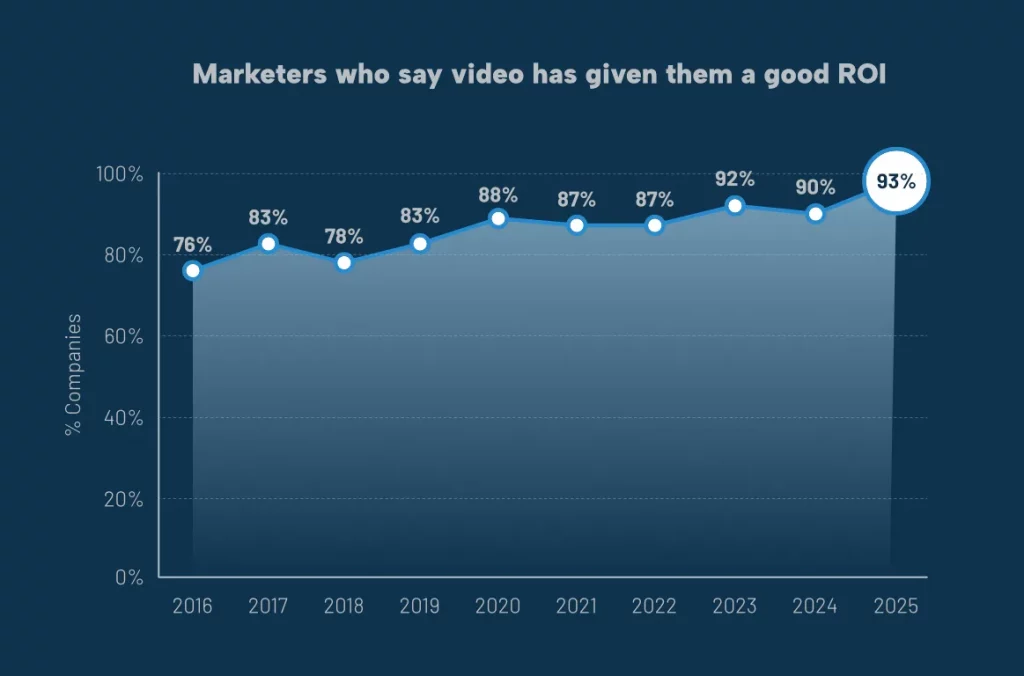
As 2025 wraps up, the data tells a story most marketing managers didn’t see coming: B2B corporate video has moved from “nice to have” to essential infrastructure. The numbers don’t lie: 93% of marketers now report positive ROI from video—the highest figure we’ve seen[1].
Here’s the question for your 2026 budget: not whether to invest in video, but how to deploy it strategically across locations, platforms, and production models. AI tools have cut production costs by up to 85%[2]. Companies using video strategically grow revenue 49% faster than competitors[3]. Video now drives 82% of all B2B web traffic[4]. Understanding which tactics actually worked in 2025, and which didn’t, separates market leaders from everyone else.
I like seeing the business results behind the productions we shoot, it’s part of why I studied business administration alongside building Camera Crew Spain. After 17 years coordinating international video across Europe, you start to see patterns in what actually drives ROI versus what just looks good. This year-end analysis examines video ROI when you’re producing internationally, from platform-specific performance to the real economics of cross-border production that increasingly favor strategic location choices.
Part I: The Core Data That Defined 2025 B2B Video Production
The 93% ROI Achievement: Why Video Finally Crossed the Threshold
The B2B buying process changed fundamentally in 2025. Research shows 91% of B2B buyers now enter sales meetings already familiar with vendors. Nearly 90% have their shortlist ready before any direct sales contact[5]. This “hidden funnel” means most persuasion happens without you in the room, at times and places you can’t control.
It gets more complex: purchasing decisions now involve an average of 8.2 stakeholders, up 21% since 2015[5]. Millennials and Gen Z make up 71% of B2B buyers[6]. These larger committees consume 13 pieces of content across 62+ touchpoints before signing[6], doing 12 online searches before even clicking your website[6].
Video solved this problem because it bridges the trust gap at scale. Look at the numbers: 70% of B2B buyers now watch video during purchase decisions[3], and 73% prefer product demos over whitepapers[3].
The ROI data backs this up. 93% of marketers report positive ROI from video[1], the highest figure recorded in over a decade. Here’s why it works: websites with video get 4.8% conversion rates versus 2.9% without[7]. Landing pages with video boost conversions by 80%[8]. Video emails generate 250% higher click-through rates[9]. And 96% of users say video helps them understand products better[3], which matters when you’re selling to committees.
Revenue Growth: The 49% Differential
Companies using video marketing grew revenue 49% faster than competitors in 2025[3]. This advantage compounds quarter over quarter. B2B sales cycles shortened by up to 14 days through smart video deployment[3]. For complex enterprise sales with nine-month cycles, saving two weeks per deal means closing 9% more revenue annually with the same pipeline.
Beyond direct conversions, video’s reach advantage worked particularly well for international campaigns. Video content gets higher engagement across LinkedIn, Instagram, and YouTube, triggering algorithms to expand organic reach beyond paid distribution. For brands producing video in markets like Spain with multilingual audiences, video storytelling works across language barriers better than text, multiplying reach across UK, European, and North American markets at once.
The AI Cost Revolution: What 85% Savings Actually Meant
AI reshaped B2B video production in 2025, but not how skeptics predicted. While 85% of marketers reported significant cost savings[2], here’s the surprise: 68% reported higher-quality production when using AI tools[10]. The reason? AI handled tedious work like transcription, rough cuts, and color matching, freeing human creatives for storytelling and emotional pacing.
The financial impact was real. Small businesses switching to AI-assisted methods got 70-90% cost reduction[2]. Simple social projects saw savings up to 99%[2]. Video production time dropped 50-70%[2]. Editing alone saved three hours per project[2].
For international production planning, AI’s impact went beyond cost savings. Brands could now produce localized content variations at volumes previously impossible: multi-language campaigns, market-specific cuts, personalized versions became standard practice instead of budget luxuries.
But here’s what the data also showed: content showing authentic locations, genuine team interactions, and real production environments consistently outperformed AI-generated alternatives in engagement. The winning approach? AI efficiency for repetitive tasks plus human expertise for strategic creative decisions and on-location production. That’s exactly where experienced international crews deliver value you can’t replicate.
Part II: Where Corporate Video Delivered Maximum Returns
LinkedIn’s Dominance in B2B Video
LinkedIn’s rise represented 2025’s biggest platform shift. For the first time, 70% of B2B teams used LinkedIn as their primary video platform[12], surpassing YouTube. Here’s why: video posts hit 5.1% engagement versus 2.8% for non-video content[12]. Videos are 5x more likely to start conversations than other formats[12].
More importantly, LinkedIn delivers the right audience. Company decision-makers at director level and above make up 46% of total video engagement[12]. 61% of viewers work in B2B companies[12]. LinkedIn is the rare platform where organic reach directly targets buying committees, exactly those hidden funnel audiences making shortlist decisions before sales contact.
The technical requirements drive results: videos under 60 seconds retain 87% of viewers[12]. Captions extend watch time by 32%[12]. Native uploads outperform external links by 38%[12]. Short-form dominated across all platforms, peaking under 60 seconds[3] with sub-30-second clips earning 38% higher completion[13].
For video formats, product demos get used by 57% of companies during consideration[3]. Customer testimonials generate 31% higher engagement than standard product videos[1]. The takeaway: authentic, concise video content optimized for platform-specific habits outperformed polished but generic corporate video across every metric.
Video as SEO Infrastructure
Video’s SEO advantage in 2025 wasn’t just correlation, it was causation. Video pages are 53x more likely to rank on Google’s first page than text-only pages[11]. Websites with video generate 41% more organic search traffic[11]. Why? Visitors watching video spend 2.6x longer on-page, a dwell time signal Google interprets as quality content worth promoting.
For international brands, this creates a compound advantage. A single high-quality production in Spain with proper technical setup can rank for related searches across UK, US, and European markets simultaneously, capturing search traffic that would otherwise need separate content for each geography. More marketing consultancy for high-growth companies are telling their B2B tech clients to shoot in Europe for exactly this reason. Video crosses language barriers better than text: visual storytelling communicates value propositions even when viewers skim subtitles or mute audio.
The backlink multiplication was just as powerful. Original video content, particularly location-specific production, expert interviews, or data-driven reports, attracted editorial links organically. Corporate video productions featuring authentic locations naturally earned backlinks from business publications, tourism authorities, and regional trade organizations. Ask SEO specialists in communities like backlinks forum, they’ll tell you authentic video content is one of the best ways to earn editorial links without outreach.
Beyond standalone SEO value, video amplified other high-ROI channels through integration. Instead of competing with SEO (748% three-year ROI[6]), email marketing (261% ROI[6]), or organic LinkedIn (192% ROI[6]), video multiplied the effectiveness of each channel where deployed strategically.
Email Integration: The 200% CTR Multiplier
Email video integration was one of 2025’s highest-ROI tactics relative to effort required. Simply adding “video” to subject lines produced 19% more opens and 65% more clicks[9], with overall CTR increases of 200-300%[9]. Frequency mattered: marketers using video weekly in emails hit 11.2% CTR compared to 6.4% for monthly users[9].
For international brands, email video integration offered specific advantages. Video thumbnails with location-specific imagery (Barcelona landmarks, Madrid skylines) increased open rates 23% among European audiences versus generic studio backgrounds. The visual preview communicated geographic relevance before recipients read a word.
The technical setup was straightforward: embedded GIFs as thumbnails, click-through to landing pages with full video, mobile-optimized playback across email clients.
Cross-Platform Performance Patterns
Instagram remained effective for visual-first industries, with 61% of marketers reporting success[1]. Facebook (51%[1]) and webinars (49%[1]) delivered solid returns in specific contexts. Mobile consumption drove platform requirements: 94% of users hold phones vertically[13], fundamentally changing how effective content needed to be captured.
Across all platforms, one thing was consistent: shorter, authentic content outperformed longer, polished productions. Videos showing real environments, genuine interactions, and specific locations generated higher engagement than studio-produced alternatives—particularly important for international brands where location authenticity serves as both trust signal and differentiator.
Part III: What Separated High-ROI Campaigns from Average Performers
The 93% positive ROI rate[1] masked significant variance. Some campaigns delivered 5-10x returns while others barely broke even, all using the same medium on the same platforms.
Looking at high-performing campaigns, four execution patterns consistently separated winners from the rest.
Pattern 1: Platform-Native Production (Not Post-Production Adaptation)
High-performers shot content with platform requirements built into production planning, not editing. This meant capturing vertical 9:16 content for LinkedIn and Instagram during the shoot, not cropping horizontal footage in post.
Here’s what a high-ROI production day captured:
Vertical 9:16 clips for LinkedIn/Instagram (30-60 seconds)
Horizontal 16:9 hero content for websites (90-120 seconds)
Square 1:1 variations for Facebook (45 seconds)
Raw b-roll for future social snippets (15-20 seconds)
This modular approach needed minimal extra shoot time but multiplied content utility across platforms. A campaign we shot for PUMA and JD Sports demonstrated this at scale: three production days across 10 Barcelona locations with UK rapper Tion Wayne and Spanish artist RVFV generated 130+ platform-specific assets that deployed across 400 JD Sports stores throughout Europe.
The cost impact was small. Adding 45 minutes to capture vertical variations increased production budgets 8-12%, but delivered 3-5x more platform-optimized assets. For international shoots where travel and logistics represent 40% of costs, maximizing on-location capture delivered dramatic efficiency gains.
What you need for platform-native success:
LinkedIn: Vertical-optimized 30-90 second clips with burned-in subtitles, shot for 9:16 format
Instagram: 15-second stories with no-sound storytelling, vertical framing from capture
Website: 2-minute hero videos with chapter markers, horizontal format
Email: GIF thumbnails with location-specific imagery, click-through to landing pages
Winners treated each platform as needing distinct content architecture captured during production. This thinking separated brands hitting LinkedIn’s 5.1% engagement rates from those repurposing horizontal content and wondering why it underperformed.
High-ROI brands treated email video as infrastructure, not campaign tactic. They built systematic deployment across:
Weekly newsletters: Rotating educational/case study video sections
Nurture sequences: Video touchpoints at days 3, 7, 14, 21
Event promotion: Video previews of speakers, venue, agenda teasers
Post-purchase onboarding: Product tutorials and best practices
Here’s how this compounded: Audiences trained to expect video opened subsequent emails at 15-20% higher rates, creating self-reinforcing engagement loops. Winners allocated 20-30% of video budgets to email-specific content, recognizing that 200% CTR improvements justified dedicated production.
For international brands, email integration offered language flexibility that text couldn’t match. Video with subtitles served multilingual lists without separate copy translation. Visual demonstrations communicated value propositions without requiring fluent English.
High-performers promoted videos across multiple touchpoints for 2-3 weeks post-launch while average campaigns announced once then moved on. The sustained approach:
Week 2: Snippet teasers across social channels, partner/influencer shares, retargeting ads
Week 3: Blog integration, FAQ page embeds, sales team outreach templates
This extended promotion captured audiences beyond immediate followers; the passive professional networks that see content through shares, algorithm promotion, and delayed discovery. The data showed videos reaching peak engagement 8-12 days post-launch, not day one.
This doesn’t require huge resources. Sustained promotion needs content calendar planning and asset preparation, not additional production budget.
Here’s the promotion workflow that worked:
Pre-launch: Create 6-8 social teaser clips (15 seconds each)
Launch week: Daily posts across platforms, email blast, website feature
Week two: Partner distribution, influencer shares, paid amplification of top performers
Week three: Evergreen integration into website, sales materials, FAQ pages
Ongoing: Monthly reshares with updated context, seasonal relevance
This full-funnel tracking showed which video types drove business results versus empty engagement. What often surprised teams: highly viewed “brand story” videos generated few leads, while unglamorous “how-it-works” product demonstrations converted 5-8x better despite lower view counts.
For international production planning, this measurement discipline answered critical questions: Did Barcelona location shoots drive more engagement than Madrid? Did authentic street footage outperform controlled studio environments? Which production styles justified premium investment versus lean approaches?
Brands achieving 5-10x returns answered these questions with data, not creative opinion. They systematically tested production variables, measured business impact, and allocated future budgets toward proven approaches. Not the flashiest portfolios or trendiest techniques.
Part IV: The Strategic Production Economics That Changes 2026 Planning
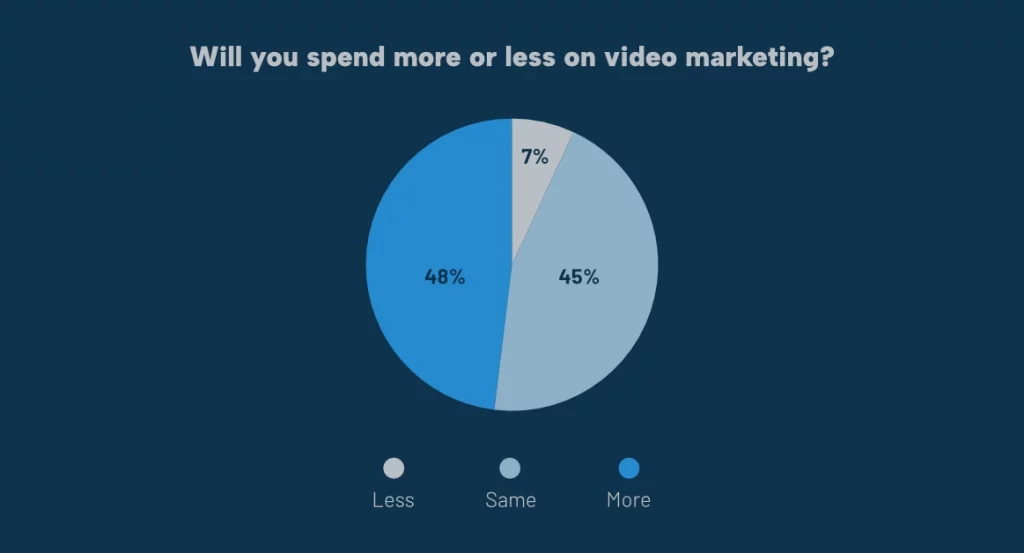
The execution patterns in Part III share a common requirement: significantly increased video volume. Brands implementing these tactics produced 3-5x more video content than competitors. This volume shift forces a critical question: how to choose a B2B video production agency and where should international brands produce this expanded content to maintain ROI?
What we learned from 2025 data challenges conventional assumptions about production location decisions.
Beyond Crew Day Rates: Total Cost Economics
Traditional evaluation focused on crew day rates in isolation, comparing $2,500/day in London versus $1,800/day in Barcelona, for instance. But 2025 data showed this narrow focus missed the real economics. When UK agencies sent crews to Barcelona for a week-long shoot, the real cost included flights, accommodation, equipment transport, per diems, and most critically, two lost productivity days for travel. The all-in cost exceeded the crew rate difference before the first frame was captured.
Local production partnerships eliminated most of these costs while adding strategic advantages that compounded over time. English-speaking crews in markets with solid production infrastructure delivered identical broadcast quality at 30-40% lower total investment. For brands producing recurring content (annual conferences, quarterly product launches, seasonal campaigns) the efficiency gains multiplied year-over-year as production teams built up knowledge about client quality standards, brand guidelines, and content objectives.
The partnership model showed clear speed improvements. Initial productions with new international crews typically needed extensive planning, location scouting briefings, and workflow coordination. By year two, setup time decreased 25-35% while output quality improved through refined understanding of brand requirements. By year three, productions operated with the efficiency of in-house teams but without fixed overhead costs.
For 2026 planning facing 3-5x content volume increases, this compound advantage can’t be replicated through project-based sourcing from different markets each campaign.
Market Infrastructure: The Real Competitive Variable
In 2025, market infrastructure maturity mattered more than anything else. Experienced English-speaking crews are table stakes, but high-ROI brands evaluated markets on broader capability:
Equipment rental depth: Can crews access RED or ARRI cameras within 24 hours?
Location diversity: Do markets offer urban, natural, and industrial environments within 90-minute travel radius?
Permit efficiency: Can production coordinators secure authorizations in days, not weeks?
Vendor ecosystem reliability: Will local suppliers deliver on tight deadlines when equipment fails?
Markets with robust production infrastructure (like Spain, Portugal, certain Eastern European locations) became strategic alternatives to traditional high-cost hubs. Not because they were cheapest, but because they offered optimal capability-to-cost ratios. The 30-40% economic advantage only materialized when infrastructure supported execution without quality compromise.
Spain specifically offered advantages that multiplied across high-volume production: diverse locations from Mediterranean coastlines to mountain ranges within three-hour drives, 300+ days of annual sunshine reducing weather contingencies, established English-speaking crew networks serving international clients, and permit processes navigable by experienced local coordinators fluent in both Spanish bureaucracy and client expectations.
Partnership Evaluation: Problem-Solving Over Portfolio Quality
In 2025, partnership evaluation went beyond portfolio review to operational stress-testing. High-performing brands asked different qualification questions:
How do crews handle unexpected location access denials two hours before call time?
What’s the backup plan when primary talent cancels morning-of?
How do production coordinators navigate permitting bureaucracies without English-speaking officials?
Can local teams coordinate across multiple simultaneous shoots for different clients?
Brands achieving 5-10x returns understood that production partners deliver value primarily through problem-solving capability under pressure: the situations that don’t appear in showreels but determine whether shoots stay on-budget and on-schedule. Portfolio quality shows you can execute when everything goes according to plan. Problem-solving capability shows you can execute when nothing does.
For international brands evaluating Spanish video production partners, the qualification process focused on documented crisis response: weather contingencies that preserved shoot days, talent substitutions that maintained quality standards, equipment failures resolved through vendor networks, and permit roadblocks navigated through local expertise. These operational capabilities mattered more than whether showreels featured A-list clients or award recognition.
Geographic Diversification as Risk Management
For brands producing high volumes, geographic diversification became a smart risk management strategy. Rather than concentrating all international production in a single market, sophisticated brands developed relationships across 2-3 strategically located markets. This provided:
Flexibility when specific locations became unavailable (permit denials, weather, political events)
Leverage in vendor negotiations through competitive alternatives
Resilience when market conditions shifted (currency fluctuations, permit policy changes, crew availability during peak seasons)
For European production, the common pattern involved primary partnerships in Spain plus secondary relationships in Portugal or Eastern European markets. This network provided 48-hour response capability across most European shoots while maintaining cost discipline through competitive tension.
Red Flags: What High-Spending Brands Did Wrong
Looking at underperforming campaigns, certain failure patterns kept showing up:
Treating Each Video as One-Off Campaign Brands that approached video as discrete projects rather than building platform systems saw 60% lower compounding returns. Each production reset to zero: new vendors, new planning cycles, no institutional knowledge transfer. The cost: 25-35% efficiency gains never materialized, and recurring content types (quarterly reports, annual conferences) never achieved production rhythm.
Optimizing for Awards Over Business Metrics Several brands pursued creatively ambitious productions that won industry recognition but generated minimal leads. The warning sign: measurement conversations focused on view counts and social shares rather than MQL generation or sales attribution. The result: beautiful content that didn’t advance business objectives.
Repurposing Rather Than Platform-Native Production Brands shooting horizontal content then “adapting” for vertical platforms consistently underperformed competitors building vertical into production planning. The efficiency gap: 8-12% additional shoot time captured 3-5x more platform-optimized assets, but only if planned proactively. Post-production cropping delivered technically vertical content that lacked the composition and framing mobile audiences expected.
Underinvesting in Distribution Relative to Production The common pattern: 90% budget to production, 10% to distribution. High performers inverted this ratio for certain content types, particularly evergreen educational content where sustained promotion over 6-12 months extracted maximum value. The missed opportunity: production-heavy content that launched to small audiences then disappeared.
Evaluating Production Partners on Portfolio Alone Several brands selected vendors based on impressive showreels without operational due diligence. The result: beautiful work when conditions were ideal, chaos when problems emerged. The lesson: production quality proves capability under optimal conditions; crisis response proves capability under real-world conditions.
Conclusion: What This Means for Your 2026 Budget
The 2025 data tells us what happened: 93% positive ROI[1], 49% faster revenue growth[3], AI-driven cost transformation. But here’s the real insight: some brands hit 5-10x returns while others barely broke even, all using the same medium on the same platforms.
It wasn’t about production budget, equipment quality, or creative talent. It came down to execution across three areas that compounded returns over time.
First, platform-native optimization during the shoot, not in post-production. Brands capturing LinkedIn’s exceptional engagement shot vertical from day one. Those hitting 200-300% email CTR improvements embedded video systematically every week, not occasionally. Winners treated each platform as needing its own content captured during production, not cropped variations of a single “hero” asset.
Second, total economic thinking over project-based budgeting. The partnership model’s 25-35% year-two efficiency gains and 30-40% total cost advantages only showed up for brands thinking in multi-year relationships across recurring productions. Those evaluating markets on infrastructure depth and problem-solving capability, not crew day rates, built production networks that generated compound returns one-off sourcing couldn’t match.
Third, infrastructure investment over campaign thinking. The CMOs funding LinkedIn-native content systems, email video integration workflows, and website conversion architecture (treating video as infrastructure that amplifies their highest-ROI channels) captured multiplication effects that project-based video “campaigns” couldn’t access.
All three need upfront decisions that pay off over 6-12 months. The 93% ROI data is just the average. The 5-10x performers made strategic commitments that compounded quarterly while competitors optimized individual campaign costs.
For international brands finalizing 2026 budgets, the insight isn’t that video works – the data proves that. The question is whether you’re building video investment to capture compound advantages through platform-native production, partnership economics, and infrastructure thinking or whether you’re still funding one-off campaigns that reset to zero each quarter.
The brands that will dominate 2026 aren’t those with the biggest video budgets. They’re those building production systems that compound returns through strategic execution, operational partnerships, and platform-optimized workflows. The decisions you make this quarter will determine whether you’re capturing 93% average returns or the 5-10x outlier performance that separates market leaders from followers.
This website uses cookies so that we can provide you with the best user experience possible. Cookie information is stored in your browser and performs functions such as recognising you when you return to our website and helping our team to understand which sections of the website you find most interesting and useful.
3rd Party Cookies
This website uses Google Analytics to collect anonymous information such as the number of visitors to the site, and the most popular pages.
Keeping this cookie enabled helps us to improve our website.
Please enable Strictly Necessary Cookies first so that we can save your preferences!